Adapting, Advancing, Accelerating
January 9, 2017 § 2 Comments
“Life is what happens to you while you are busy making other plans.” – John Lennon
The above quote is one of my favourites, wisdom I’ve shared with others many times.
I’ve recently found myself practising what I preach with a new job at the City of Grande Prairie. I became the Manager of Intergovernmental Affairs on Oct. 17, through a small restructuring. This new position involves focusing on advocacy, strategic planning and, as the title would indicate, relationships with other municipalities and levels of government.
Up until then, my entire 34-year career had been concentrated entirely on communications, from newspaper reporting to corporate writing and editing, operating a consultancy, along with communications co-ordinator and manager roles.
There’s certainly a significant learning curve that goes with this position, relatively new in Alberta municipalities. Some duties are tasks that I would have done off the side of my desk in the past are now essential elements of my new position. Others involve skill building and opportunities for training.
My focus is more on City Council-related activities and priorities and our Corporate Leadership Team’s strategic directions. I now report to the City Manager rather than being part of a service area. I move from managing a team to having functional leadership responsibilities.
I was asked to take on this new role in a Sept. 8 meeting. Ironically, this discussion occurred immediately after a City of Grande Prairie Leadership Network Meeting where Leadership Coach Alan Goff presented on the 4 Rs to Remarkable Results.
He underlined that … “What got you HERE, won’t get you THERE.”
This is a reminder that we can’t stop learning, making changes, adapting to the evolving environment around us and being visionaries who will foresee changing circumstances.
Moving to a newly developed position within your organization has its challenges. It’s not like picking up and leaving to a job at another employer. There is personal transition and an extended period of passing the torch.
I’ve always considered myself somewhat of a mercenary – doing whatever is asked of me to complete a project, often with competing priorities. That was certainly the case when I operated my own business. I was routinely working around the needs and expectations of up to four clients daily to make things happen.
Reminding myself of this experience and that I had also pioneered the first communications officer position at the Huron-Superior Catholic District School Board certainly helped me to adapt. So did this quote from Ekaterina Walter, a recognized business and marketing thought leader.
“In the midst of change we often discover wings we never knew we had.”
Here are some highlights of Goff’s 4 Rs to Remarkable Results.
- Face Reality – Take responsibility for your results and those of your team.
- Relinquish what is in your way.
- Rely on the process – stay positive and avoid the ‘crabs in the barrel’.
- Reform to a better way – Change small, but often.
I follow the work of Tony Robbins and am fond of using his quip, “If you do what you’ve always done, you’ll get what you’ve always gotten.”
I just discovered another piece of wisdom from this American businessman, author, and philanthropist: “Change is automatic. Progress is not. Progress is the result of conscious thought, decision, and action.”
These lessons are great advice as we embrace new challenges and changes in 2017.
How I Learned To Let Go
March 16, 2015 § 4 Comments

Flickr Photo Credit: Randy Heinitz
I’ve been back in Canada for nearly two months after my year long adventure through 14 countries on 5 continents. I’m having a hard time grasping that year, it’s almost as though it didn’t really happen, like I kidnapped myself from my surroundings for just a brief second and then inserted myself back into my life–but with one difference.
All that baggage I held on to for so long, a lot of it isn’t there anymore.
I’ve come home and Calgary feels different. As I lay in bed this morning pondering what it’s become, it occurred to me that it might not be the city that has changed so much, the Wendy who left for Bangladesh in January, 2014 is not the one who returned from Costa Rica in January, 2015.
Somebody (me) messed with my insides last year, or rather, cleaned them all up!
The woman who has returned is a sharper version of myself, and one who’s developed a knack for standing up for herself and not putting up with my bullshit.
The biggest piece of me that’s missing (not to say that I miss it), is the guilt of being the sibling who lived after the accident that killed my brother. I grappled with that for many months, in fact I still have a lot of emotion tied into moving forward, but that’s more sadness and remorse for my former self, that I let her suffer with that guilt for as long as she did.
I know I’ve made a change in the way I take on guilt because I’m not switching one guilt only to shoulder another. I allow myself to feel emotion and find ways to move through it, sometimes that’s journalling, sometimes it’s giving myself a pj and junk food day, other days it’s treating myself to exercise and as many vitamin-packed foods as I can handle.
It also took me some time to figure out my process of letting go. Moving past the guilt involved feeling it first, and I mean bringing it right up close to me and embracing every ounce of it. Those are not my favourite moments, I can assure you. What drove me at first to stick it out was just being fed up with the way I had set up my life, the lack of support I nurtured for myself and trying to make up for a life that held so much promise, but that wasn’t even my own. I didn’t know if where I was headed was any better, but I knew it would be different. That was enough.
I spent time watching what happens when I physically let go of something. I’d hang on to a pen from my bag and let it drop onto the table or the bed, just to give my mind a visual of what letting go looks like. It’s quite literally a decision to relax and open up.
“Forgiveness is the fragrance that the violet sheds on the heel that has crushed it.”
– Mark Twain
Letting go in an emotional sense for me involves forgiveness, and has a lot to do with the tattoo I got in Bali last year. When I visited my step-sister, Laura, in Costa Rica, she shared a mantra that’s helped me take this further. She strives to simply meet people where they’re at, and wherever that is is just dandy.
Laura also shared a video interview of Wayne Dyer with me. The interview is about EFT tapping and has a lot of great points, but I found a different message in the video as Nick Ortner and Wayne Dyer talk about what emotion they’re beginning to release as they complete the EFT tapping:
Wayne Dyer: “I was thinking about someone else who has done some things that I’ve felt upset about…”
Nick Ortner: “You mean you still get upset at people?”
Wayne Dyer: “Absolutely.”
Nick Ortner: “I thought you had reached enlightenment.”
Wayne Dyer: “I have! Enlightenment is part of it.”
Woah, Wayne Dyer still gets annoyed with people? I drew a new conclusion and direction to my healing–and it’s made all the difference. Eradication of the emotion or the issue is not the way through. I will always have experiences that bring me happiness, sadness, guilt, pleasure and a plethora of feelings. But they’re just that, experiences to be lived through with as much of myself as I can muster and when they’ve ended, it’s time to let them go and to make room for more life to move through me.
The Mentor in Me
April 12, 2013 § 1 Comment
“A mentor is someone who sees more talent and ability within you, than you see in yourself, and helps bring it out of you.” ~ Bob Proctor, Author, Speaker and Success Coach
It recently occurred that the first two letters in the word mentor are ME. I was musing on that after a colleague told me she sees me as a mentor and thanked me or my support.
When Angie Saltman, who operates Saltmedia, a web development company in Grande Prairie, mentioned this, I hadn’t realized I’d had an impact through our discussions about business.
But that’s the way it is with mentoring. You can be teaching without necessarily realizing it. It was particularly noteworthy because Angie is someone out in the community as there was no thought of providing anything more than casual advice.
“When we first met, I was taken with how confident you are and I realized I needed to work on that part of me,” Angie told me. Saltmedia has been in operation for three years. “I appreciated how you’ve taken time to share your career and business experience.”
That’s why I love the Bob Procter quote. It’s truly a thrill to recognize someone will thrive at an undertaking even with limited experience and confidence, and then watching them flourish.
Now I’ve won awards for my work and led a fruitful career. I’ve supervised numerous people, including employees with my own communications business. I certainly know I’ve made a difference to several people’s futures if by no other measure than the number of references I’ve provided. I know, of course, it has gone way beyond that and for someone to outright tell me how I’ve helped them is touching.
Although I’m not about to slow down, this feedback has happened enough lately from younger co-workers and associates that I feel at the pinnacle of my career.
Having colleagues recognize my role in shaping their careers is acknowledgement that I’ve invested time and energy as they find their way in the world. I think of it as my own way of giving back to a life that’s been rewarding to me.
What I have learned and pass on to others becomes the foresight of those with less experience. The true joy comes when mentees challenge and question what I have said and offer their own ideas. Even more thrilling are the times when I know I am learning from my younger colleagues.
A mentorship doesn’t have to involve someone in the same community or even direct involvement in their day-today work. I met Mary Leong, a student at UBC, three years ago while she was working in Grande Prairie. She’d been assigned to visit me to at City Hall to discuss a partnership with the agency employing her during the summer.
We’ve kept in touch over the last couple of years and I always enjoy hearing Mary’s latest news. She’s one of those people who you know will go as far as their ambition takes them. I look forward to saying, “I knew Mary Leong when …”
She wanted to contribute to what I had to say on this topic since she felt I’d influenced her career direction.
“To me, David is a long-distance mentor who checks in every once in a while to deliver news and information on the new initiatives he’s working on, but also to provide encouragement and support in a sometimes very rocky field.”
She recalls travelling to Grande Prairie to pursue a career path which she soon realized was ill-suited to her personality and interests. At the same time, she was discovering an interest in new media and communications.
“Our initial conversation was brief, but the topic of communications in a changing media landscape was brought up. I was surprised when David followed up with information about how the city was using new media and technology to connect with its citizens, which I found fascinating. That, for me, was the turning point as I realized that someone was taking an interest in my career development and providing information that could support my journey.
“These discussions provided a holistic view of the day-to-day tasks in a communications job, and spurred me to seek out opportunities to grow in the field.”
Mary is completing her Political Science and Psychology degree at UBC, and will be working for a year before starting the Politics and Communication Master’s program at the London School of Economics in September 2014.
Her goal is to work in the field of media and communications for a non-profit she’s passionate about to help enact policy change.
Mary’s own passion is to be a mentor to young minority girls to ensure they have the tools to succeed at whatever they set out to do, whether as a CEO, a politician or an entrepreneur.
Knowing Mary, those young ladies will be fortunate to have that leadership.
I thought this quote would be a most appropriate way to end this post:
“Being the richest man in the cemetery doesn’t matter. Going to bed knowing we have done something wonderful is what matters to me.” ~ Steve Jobs
The obvious lessons are always the hardest to learn
September 7, 2010 § 1 Comment

Image via Wikipedia
This summer has taught me a much-needed lesson. Well, it’s RE-taught me rather, because I know I’ve encountered this one before. I don’t know that it’s the last time I’ll need to revisit this lesson, but it seems to be in a different capacity each time, so that a good thing, right?
The lesson I’m learning is this:
I am not exempt from the effects of the natural progression of life or from the laws of this universe.
How incredibly obvious. And yet, it remains something that I, and many others out there, continue to try to defy. Youth has proved my defiance right in the past, but three separate instances this summer have given me reason to pause and rethink my approach.
The first one is that over the last couple of months, I’ve noticed a fairly consistent ringing in my ears. I figured it was stress and would go away once life settled down. It’s the end of summer and life is settling down. The ringing is still here. I also find myself straining a bit harder to hear what people say. I once could hear what others could not, now I’m turning up the volume?
The second is that I’ve had an incredibly busy summer, which isn’t out of the ordinary. But instead of feeling refreshed and invigorated from all of the activity, I’m just plain worn out. Where is my youth that thrived on that energy level and used it to fuel and propel me forward?
Thirdly, I was home for the long weekend and I took my dog Tetris out for a run. As we jogged down by the creek in Millet, I noticed that my calves and my shins weren’t as spry as they should be after a summer of shenanigans and Ultimate Frisbee. In the past, I’ve always bounced back fairly quickly after a lot of activity with minimal maintenance and effort.
What’s going on?
Age.
Last fall, David had a post about the importance of health before wealth. It was a great reminder to take care of ourselves now. And yet I was still of the mindset that I was young enough that I didn’t have to. For the first time, health before wealth is really hitting home for me. Of course I *know* that things like stretching after exercise, eating well, getting enough sleep, etc. is important. But I’ve always bounced back quickly when there was a lack of any or all of these things.
Had the hearing, the sore muscles and the exhaustion not happened within a short period of one another, I doubt I would have paid them much attention. But I’ve always believed that when things come in threes it’s a signal. Here’s my signal to put health before wealth.
The somewhat ironic part is that in doing so early, I become exempt from many of the situations I may find myself in if I continued to ignore the lesson here. But it most definitely makes for a clear choice. Health before wealth now for me too.
O Canada – True Patriot Love
June 30, 2010 § 2 Comments
I suppose it was only natural that the Canadian Public Relations Society national conference was held just a couple of weeks before our country’s birthday.
Several moments during the three-day event held in Regina June 13-15 evoked strong sentiments of patriotism – and I don’t know of anyone prouder of our great nation than myself.
First, I met people literally from sea to sea during the conference so there was already a special feeling to the event.
Since it’s been a long-term dream of mine to travel to every part of our country, I was thrilled with this great opportunity to network with these colleagues from near and far, a few I had connected with in person before, but most I only knew by name. Numerous, like me, were attending for the first time.
It is always wonderful to gather with people from your own profession. When they also happen to be from every part of our great land, it is a terrific time to learn more about our country – first hand from people who live in these other places.
While we occupy the second largest country in the world and there are definitely some regional characteristics, Canadians really don’t vary a lot from coast to coast. It is more the personalities of each region and accents that stand out.
For example, the opening meal of the conference was dubbed as a Fowl Dinner, essentially the fare one should expect from the region around Regina. Some diners were not sure what the small white objects were near the end of the food line. Some wondered what the white condiment was. Well, they were perogies, of course, and you would want sour cream to accompany them.
Next June, I will be able to fill part of my Canadian travel void since the conference is scheduled for St. John, New Brunswick.
I have a brother-in-law who teaches at the University of New Brunswick in Fredericton, so it will be wonderful to make a side trip. Oddly enough, we will make it to the East Coast faster living in Alberta than by being in Ontario for 20 years. Since my wife and I will be celebrating our 25th anniversary, it will be a splendid opportunity to make a holiday of it.
Another moment of nationalist feeling came when Lynda Havertock, president and CEO of Tourism Saskatchewan, gave an inspiring account of efforts to market the province in recent years.
It gave me pause for thought because a lot of people think of Saskatchewan mainly in terms of its major cities of Regina and Saskatoon, the prairies and, of course, the Roughriders.
Most people would not think the province could offer water enthusiasts a body of water the size of Lake Diefenbaker or other remarkable landscapes like the Cypress Hills.
Everyone has heard the jokes of how you will begin your day driving across Saskatchewan and can see far off in the distance where your day is going to end.
What this tells me is that if you take time to stop, every part of our country has something to offer.
An especially poignant moment came when our group stopped in at the RCMP headquarters and took in a presentation by new the latest crop of new officers. I had my photo taken with new recruits from my current location in Grande Prairie and my former community of Sault Ste. Marie.
It caused a few misty eyes to consider these and other new officers are about to put their lives on the line every day for residents near and far from their homes.
The highlight of the conference was Peter Mansbridge.
I have never found the CBC anchor to elicit much emotion from me, but I was extremely proud to be a Canadian when he illustrated the impact of what people from our country have had abroad.
He should know. Mansbridge has travelled the world over countless times in his decades with our national broadcaster.
Mansbridge recounted how he encountered a young girl in Sri Lanka who had wonderful thoughts of Canada thanks to medical aid administered by nurses from Vancouver. They had thought it to be imperative that they travel to the tiny country when natural disaster wreaked havoc.
He reminded us that the Dutch memory of Canadian troops liberating their country in World War II lives on in school children today. They visit grave sites of our fallen soldiers from that conflict.
Then there is the young woman he met from Afghanistan who is so taken with her new country of Canada that she feels compelled to return to her homeland to tell people there how good it is here.
As Canada Day approaches, it was great to have even more reasons to feel good about this nation.
Many Canadians are so busy navel gazing that they fail to recognize just how wonderful our own country is. Sometimes it takes a visitor from another country or someone who has been abroad to drive that message home for us.
I enjoyed my visit to Regina. I learned even more about a part of the country I had only previously seen driving back and forth across the country.
It was also great to be connect with a lot of new colleagues. I look forward on gaining additional perspectives on our great nation next year in St. John.
Happy Birthday, Canada, Our Home and Native Land!
Forget-Them-Not
April 26, 2010 § 13 Comments
 On April 28th, we will observe a National Day of Mourning as established by the Canadian Centre for Occupational Health and Safety (CCOHS).
The purpose of the day is in “commemorating workers whose lives have been lost or injured in the workplace.” The CCOHS estimates that from 1993-1998, 14,190 people lost their lives due to work related causes. In my books, those 14,190 deaths that could have been prevented.
On August 10, 2005, a police officer came to my door. I had just come home from a 4 week trek through Italy and Southern France two weeks earlier to celebrate the end of my degree from the University of Alberta. I had begun my job search as soon as I was back in the country and had an interview scheduled that day in Edmonton with Enterprise Rent-a-Car. I never made the interview.
I was just about to step in the shower when the doorbell rang. I grabbed my housecoat and headed upstairs. On my doorstep was an RCMP officer. The next couple of minutes happened as if they were in slow motion. Every word, every detail is etched in my memory.
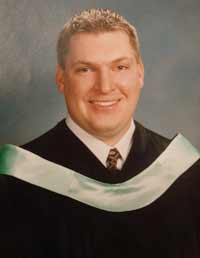 “Do you know a Wayne Jacob Peters that was born October 21, 1978?” the RCMP officer asked me.
I looked at him a bit suspiciously as I replied “Yes, I do. He’s my brother.”
The RCMP officer looked at me and said “I’m sorry, your brother has been in an accident.”
That sentence hung in the air for a moment before settling on my ears. A million thoughts and questions raced through my head in the ensuing seconds about what could have happened before I answered “Oh my God! Is he okay?”
I expected to hear that he had been in a bad accident and that we should get to the hospital right away. Something like “Your brother was hit by a drunk driver and is in critical condition” was along the lines of what I was preparing myself to hear.
But life doesn’t ever bring us the news we expect. The RCMP officer looked right into my questioning eyes. I could see the answer then before he even said the words, but even a split second of warning wasn’t any preparation for what I heard next.
“No he isn’t. I’m sorry, your brother didn’t make it.”
I can hear those words as though the officer were repeating them in front of me now, they’re still that clear. I looked at the officer in disbelief and all I could muster was “Are you kidding me?” Of course, the answer was no. Wayne Jacob Peters of Millet, Alberta, born October 21, 1978, was found dead the previous evening 90 km north of Slave Lake around 11 pm.
The RCMP officer proceeded to ask if there was anyone he could call for me. My mom was in BC, but I got a hold of my dad. He happened to be in Millet. I now stood on the other side of the news. Having to repeat the devastating information I had received only minutes earlier to my father was worse than hearing it myself. As soon as he drove up, he rushed out of his truck and hugged me so hard. At 23, that’s a lot of emotion to take in in only a few minutes.
After that news and that hug, a part of me shut down for a very long time. It’s been only in the last month or so that I’ve began to understand the shock and trauma my system was subjected to, and that six years later, I’m finally able to start processing it.
The Workers’ Compensation Board proceeded with an investigation. Wayne was a chemical engineer working in cathodic protection. He was checking on a pipeline in Northern Alberta. On August 9, 2005, he was to meet his coworker back at the motel they were staying at by 7 pm. When he didn’t show up and wouldn’t answer his cell phone, his coworker knew there was something out of the ordinary. At 11 pm, Wayne was found dead by the rectifier he had been checking earlier. He had been electrocuted.
After reading the report from the Worker’s Compensation Board, no one party was at fault. There had been several factors at play with regards to the voltage going through the rectifier, and the fact that Wayne was performing tasks only intended to be performed by a certified electrician, which he most certainly was not. Mostly what I got out of reading the report was that his death, this work site “accident” could have been prevented.
Wayne was 25. He had a bright future as a chemical engineer. And now he’s one of 14,190 Canadians that died for no particular reason.
I’ve struggled for years with the suddenness of his death. I tried to tell myself that I was fine, people all over the world go through this too. I felt like I didn’t have the right to be angry with the rest of the world, after all, there were still people much worse off than I. But in doing so, I didn’t allow myself to find a way to come to terms with what had happened. When I heard an ad on the radio for The National Day of Mourning on April 28th, I felt like now I could give it a reason, even if it’s just to put my own mind at ease. He died so someone else wouldn’t have to.
I often forget just how little it takes to prevent an accident. Turning off your phone while driving, inspecting your equipment to make sure it’s safe, not performing a task you’re not specifically trained to do even though you may have done it before. And then something comes up to remind me of Wayne. And paying attention resurfaces as a priority in every task I perform.
My brother died so you and I wouldn’t have to, at least not from something we could have prevented. So, on April 28th, I’ll be joining people from over 80 other countries around the world not only to remember the dead, but to help protect the living. I hope you’ll join us too.
Connecting Opportunity With Reality
February 2, 2010 § 8 Comments
Young people have more opportunities than ever before.
Some people will suggest I’m certifiably nuts for that statement. What about the economy? What about the global uncertainty caused by terrorism? What about financial barriers to post-secondary education?
The fact is there have always been challenges to achieving success. There always will be.
In my own realm in the communications field, the possibilities have grown exponentially over the years.
I have moved from being a newspaper reporter with stops in St. Paul and Grande Prairie, Alberta and Sault Ste. Marie, Ontario to corporate writing and editing for a Crown corporation to operating my own communications firm to communications in the education sector to my current position as Manager of Marketing and Communications at the City of Grande Prairie.
Thanks to technology, someone in the communications field here in Grande Prairie could be producing copy for a company in Warsaw, Poland and never set foot in the country. For that matter, an entire website can be produced for a client in Walla Walla, Washington and no actual direct conversation needs to take place.
When I graduated from college, you could be a print, television or radio reporter. Now, you can have a job reporting completely online. There are companies specializing in advising companies and governments on how to maximize social media opportunities.
At the time I left college, Public Relations practitioners were not nearly as widespread as today. Back then, Marshall McLuhan stating, “The medium is the message” still resonated readily with people. Now, there are a myriad of mediums and there is a general recognition in the importance of communications – and the consequences of it being done poorly.
By merely mentioning Grande Prairie, Sault Ste. Marie and Walla Walla, Washington in this Blog, people who have these place names in their Google alerts will be notified about it.
As far as barriers go, I left college at a time when bumper stickers in Alberta read: “God, grant me another oil boom and I won’t piss it away this time.” This may be the first economic crunch of the generation, but it is nothing new for anyone who’s been in the workforce any length of time.
I grew up listening to news of every morning of political strife in Northern Ireland. I remember watching the American troops pull out of Viet Nam.
A similar explosion of career possibilities has occurred in other professions. A whole industry has sprung up around the green movement – my close friends, Cecilia Lu and Sofia Ribeiro, at Kiwano Marketing have found a niche in green marketing.
So, how does all this relate to young people in 2010?
There needs to be a far better connection to the opportunities and the realities.
Many parents and the education system, to a large degree, still have the mindset that little Johnny and Mary, starting out in Grade 1, will go to university because, after all, they need a high level of education to get a good job.
It really is much more complicated than that – and there are enough taxi drivers with degrees to debunk that notion.
In 2002, 58 per cent of Albertans aged 25-34 reported having completed post-secondary education. The rest? Well some would have started into college or university and dropped out while others went directly into the workforce from high school. A significantly high number of students still do not complete high school – in the 30 per cent range in some areas.
It is clear that the vision many of us as parents have when our children begin Kindergarten and the reality is not at all connected in many cases. Nor should it be.
How can we know what skills and aptitudes our children will have at age 5? In my own case, I didn’t even like school until I was in Grade 12.
My son graduated from high school and has attended college, but has decided to take a break until he determines what direction the schooling is taking him.
I support his decision. No education is lost, but when there is not an unlimited source of funds, there needs to be some focus.
Given there is no end of choices, I want my son to find something he is passionate about – unless, as parenting expert Barbara Coloroso would say, that choice is life-threatening, morally-threatening or illegal.
He might be best suited to travel for while and maybe work overseas. Unlike when I was his age, people backpacked in other countries and had to scrape up jobs to continue their travels, there are now actual programs that will help people line up opportunities and help them make arrangements for living abroad.
Far too many people are bored or stuck in a rut before age 30, despite the opportunities.
Sometimes that is because parents or the students themselves rushed a decision about a career choice. In other situations, people’s likes or circumstances change.
I believe a big improvement in the success rate would be made if co-operative education was mandatory for all high school students, even the ones who are adamant they know their career path. Maybe some time in the workforce in their chosen occupation would save thousands of dollars by students realizing a career path is not for them before it is too late.
There also needs to be more flexibility in the system. We can’t always pigeon-hole students and must allow for diverse interests.
A hands-on student may also have an academic side. In a world that emphasizes entrepreneurism, it would be handy if a young person who’s gifted in electronics could also take business courses. From first-hand experience, I know it is easier to operate a company if you have both practical experience and some courses to help you understand the ins and outs of business.
Although the education system has evolved in recent years, more needs to be done to ensure students are prepared for the realities of the real world, particularly given so many don’t actually attend post-secondary.
I am pleased there is more recognition that students acquire knowledge in a variety of ways and teachers are being instructed in how to address differentiated learning.
More parents need to realize they need to have a significant role in their children’s education. We shouldn’t criticize the education system if we’ve invested little in knowing how it works or supporting the people in it.
Our children’s teachers spend more waking hours with our kids than we do during the week, yet far too many educators get little support. In fact, a lot of people seem to think they could do a better job.
Society needs to do more, too. It was enough that schools were expected to teaching Reading, Writing and Arithmetic. Then it was sex education and drug education. As families became more dysfunctional and social problems became more prevalent, they have had to become part-time psychologists and counsellors.
Now, in many schools, kids are being fed at the school before classes get under way in recognition that children learn better with a full stomach.
There is an old African proverb that it takes an entire village to educate a child.
If we expect little Johnny and Mary to capitalize on the opportunities, then all of us must do more to make it happen. We need to be willing to change our thinking about how reality and opportunities can better connect.
As author and motivational speaker Tony Robbins notes, “If you do what you’ve always done, you’ll get what you’ve always gotten.”
 The Muse and Views